Advertisement
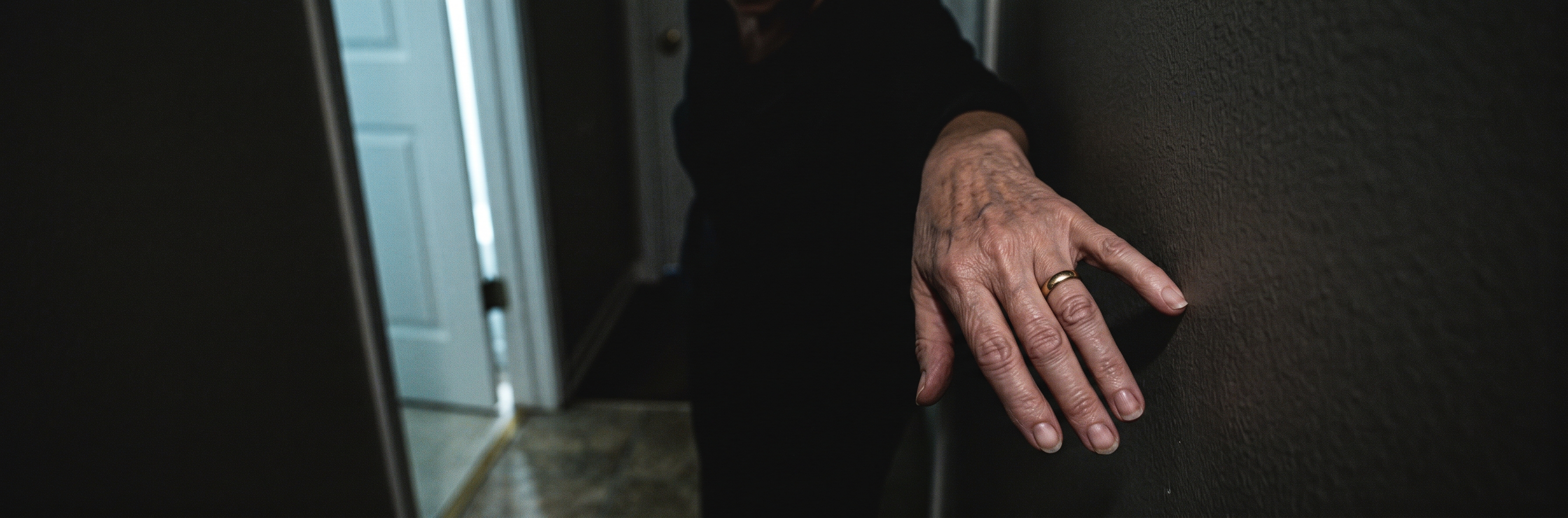
The Hand Goes to the Wall Before Your Foot Touches the Floor
Why the first step after six hours of lying still is the one that's stopped holding you — and what's actually missing under your heel.
You didn't fall. You caught the doorframe. And you stood there in the dark with your heart going, doing the math on who would have known.
It started smaller than that. A hand on the wall at night, "just being careful." The nightstand first, then the breath, then the step. You never mentioned the wall thing to anyone, because saying it out loud would make it a thing.
Then one night the foot landed wrong on the way to the bathroom and the doorframe took your whole weight, and you stood there half-awake with one clear thought: if I'd actually gone down, nobody would have found me until morning.
Here's the part nobody explained. The first step after hours of lying still isn't hard because it's dark, or because you're getting older. It's hard because your foot has to take all of you, cold — and something under your heel that used to take that load has quietly gone missing.
I know, because I stood in that doorway at ten past three on a Thursday. Let me tell you about it.
Diane is a composite drawn from conversations with customers and readers; names and details have been changed.
What I'd already tried
My name's Diane. I'm sixty-six, forty years on hard floors — a hospital ward, then a dental office front desk — and for the last of them I'd been quietly reorganising my days around my feet without telling anyone.
I'd tried what you've tried. The gel inserts that felt wonderful for a fortnight. The memory foam. The stretches off a printout. The store in the mall, where a man in a polo shirt watched me walk across the floor and quoted me a number with a comma in it. Every one of them did exactly what it was built to do. None of them was built to still be doing it in week three.
The drawer
I didn't find out from a doctor. I found out from the drawer.
I was looking for the good scissors. The hall drawer had four insoles in it, every one bought with real hope. I turned the newest one over — the gel one that felt like walking on a cloud in the shop — and pressed my thumb into the heel.
It went flat. No resistance at all.
I pressed the next one. Flat. The memory foam. Flat. The "medical grade" pair. Flat.
And I stood in the hall holding a thing that had cost me forty dollars, thinking: this folds under my thumb. What has it been doing under all of me — every step, every day, for a year?
That was the question that changed everything. Not "what's wrong with my feet." What has been under them.
What I understand now
I'm not a doctor. But this is the part nobody had told me, and once I had it the whole year made sense.
Under your heel bone there's a pad of fat, held in a honeycomb of collagen — your body's own shock absorber. It thins with age, and as it thins it spreads: less under the bone, more squeezed out to the sides. So the heel sits closer to the floor, and the arch above it, which was counting on that pad, starts losing its height under your own weight. When the arch drops, the foot rolls in, the knee follows, the hip tilts. That's why the ache had started climbing.
That's it. That's the whole mechanism. One thing, at the bottom of me.
So the question was never what was wrong with my feet. The pad thinned. The arch followed. The question was what I'd put underneath — and four times, the answer was something soft. Soft under a structure that's already giving way doesn't hold it up. It gives way with it. The gel wasn't lying to me in the shop. It just wasn't answering the question. The question was never "what feels nice." It was "what holds."
What has to be under the foot
Not a pillow. Not a plank. Two things. A deep, structured cup around the heel that gathers what's left of the pad and holds it where it works. And a firm bridge under the arch that keeps its shape when your full weight lands on it — not rigid, firm. Cup and bridge. That's the principle. It's the structural opposite of cushioning, and it isn't what the drugstore aisle sells.
You don't have to take my word for it. Take whatever insole you're wearing now, turn it heel-up, and press your thumb into the cup. If it folds under a thumb, it folds under all of you.
What I found
I found a pair built to that principle and nothing else. They're called ZenStride Restore. They call it three zones. The two I'd worked out for myself were the cup and the bridge — a deep, structured heel cup, and a firm arch bridge that holds its shape under load. The third — a small rise under the outside of my midfoot, a spot every insole in my drawer was flat across — I hadn't even thought of. They support the foot's natural alignment from the ground up, and they went into the shoes I already own. The first week they felt like structure, because they are. By the second I'd stopped noticing them.
I'll tell you what changed, and I'll tell it small. I get up at night and my hand doesn't go to the wall. I reached the grocery bag before Ron did, and neither of us said anything. The placard's in the glovebox. Thanksgiving was at mine, and the fourth hour at the stove was just the fourth hour.
I'm not going to tell you it fixed everything. I'm sixty-six; nobody's asking to be twenty. I'll tell you I'm still the one who decides. It started at the ground.
— Diane
From StepRelief
These aren't for everyone. If you want something that feels like a pillow on day one, this isn't it — structure feels like structure, and most people need a week or two of short wears. If a clinician has prescribed a custom device, use that. If your pain is new and sharp, get it looked at first.
Read the return policy first
An ironclad, 60-day, money-back guarantee. Structured anatomical support is engineered to hold the arch at height under load. Most customers report their knees and lower back feel it within a few weeks — though we can't promise a specific result for you. If you're not satisfied within 60 days, we'll refund every penny. No fine print, no store credit, and absolutely no arguing.

Or press your thumb into the one you're wearing first. We'll still be here.